

Canonizing Seraphim Rose: Holiness, Ideology, and the Politics of Saints
Part 2 of 4

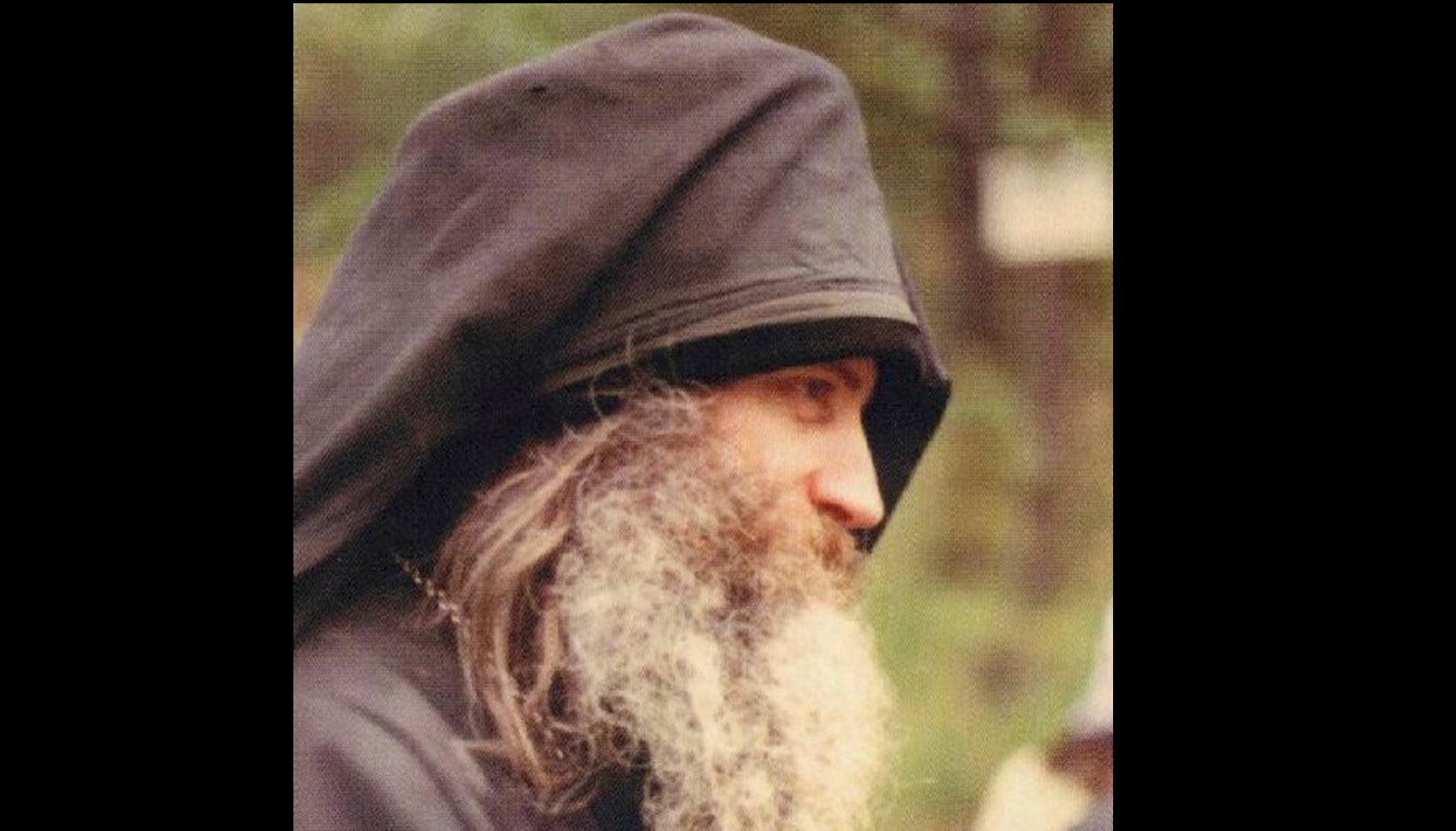
I didn’t plan to write more about Seraphim Rose, but the discussion around my previous post became intense enough that I decided to rework one of my longer comments into this “Part 2” text.
When we speak of canonizing Seraphim Rose, what is it that we are actually canonizing?
One of the comments on Substack I received yesterday answered this question in the following way:
“His warm and humble heart, his love for his spiritual children, his rejection of modernity as an ideological canon to which we must adhere, his pursuit of inward peace, his love for Christ, his exemplification of the ancient ascetic life in modern conditions, his love of the saints. I believe quite firmly that when all is said and done, this is what he will be in the souls of the faithful as a beacon of holiness.”
Reread this quote. Isn’t it very telling that the author lists “his rejection of modernity as an ideological canon” before mentioning his love for Christ? For me, this is a red flag – precisely the kind of culture‑war marker that I am deeply worried about: the rejection of “modernity” comes first, as the primary identity badge, and only then Christ and His love.
A second comment from the same person develops this line in a different way:
“I think the history of the church is abundantly endowed with problematic saints. Sometimes the saint’s life is held up but not the doctrine (St Augustine in the east is basically viewed this way, as Fr Seraphim himself pointed out!); sometimes the doctrine but not the life (St Cyril of Alexandria, as someone pointed out to me today); sometimes both doctrine and life. It is not always clear. When the Royal Family was to be glorified, I remember the conversation – this would canonize the Black Hundreds! But now I, an American convert, venerate the Royal Martyrs and I am not a monarchist or a narodnik.”
I very much appreciate this reminder that the Church has always had “problematic” saints and that God works in and through our failures. My concern is not primarily with Nicholas II personally, or with Fr Seraphim personally, but with what their cult becomes in the Church in a particular historical setting.
With the Royal Family, I saw this very closely. I was personally involved in the question of recognizing their remains, travelled many times to Ekaterinburg and Porosenkov Log (the area where the remains were found), and reported directly to Patriarch Alexy II. I have deep respect for their personal tragedy and for the work of the historians and experts who examined the remains. But in Russia the cult of the last Tsar did not remain just a story of a suffering father and his children, and their attitude to suffering in the light of Christ; it was gradually absorbed into a myth of a “holy Emperor of the Christian Empire,” which then fed a Christian‑nationalist narrative for decades—with very real consequences, including theological and pastoral justifications for the current war in Ukraine.
In Russia, the cult of the Royal Family now functions as part of a sacralized “Christian Empire” myth—very similar to how some American Christians sacralize a certain imagination of “Christian America” and then read all politics through that lens. I am not questioning Nicholas’s personal faith and piety, nor the sincerity of those who venerate the Royal Martyrs. Let me say it again in a different way: I am worried about the way his cult was absorbed into a Christian‑nationalist narrative—very much like how Christian symbols in the US are pulled into Left/Right culture wars.
I witnessed how, in Russia, this “holy Empire” myth has directly supported a theological justification for imperial nostalgia, for “holy Rus” against the godless West, and, in the end, for the current war in Ukraine and for persecution of those Christians in Russia who rejected war and violence as an ideological basis for cooperation between Church and state. Not automatically, not in every heart—but structurally, it has fed Christian nationalism.
What I am trying to say about Fr Seraphim is not just that I am “afraid” of something in a psychological sense, but that I understand how the cult of saints works in contemporary Orthodoxy. If there is even a small dose of ideology mixed into the veneration of a saint, it is precisely that ideological element that will be placed at the center, whatever the more romantic intentions of those who desire the canonization may be.
In the American context, a canonized Fr Seraphim will almost inevitably be used as a legitimation of a very specific package: anti‑ecumenism, culture‑war rhetoric, conspiracy‑tinged apocalypticism. Whatever his personal sanctity may be, he also wrote a great deal that is highly problematic and ideologically loaded, and that is exactly what will be foregrounded. With Fr Seraphim, I suspect we will see the same distinction we have already seen in Russia: whatever his personal holiness, his image will be weaponized as a banner for a certain ideological, culture‑war Orthodoxy in America. My worry is not only what he was, but what his image will authorize.
Precisely because God does work through our failures, I believe we have a responsibility at least to name and resist this instrumentalization of sanctity—in Russia and in America alike.
Part 1. When Orthodoxy Becomes Ideology: On the Canonization of Seraphim Rose >>
Thank your for letting others hear your voice of reason. In his very short life as an Orthodox Christian, Fr Seraphim Rose became an important figure for a particular strain of the Orthodox ideal, which he and others seem to believe is true Orthodoxy. As such, he has also become a figure who accents divisiveness within the Orthodox Church(es). This is evident in the way that he is either fawned over or simply avoided in different forms of Orthodoxy. Canonization will probably serve to strengthen this divide.
I appreciate your concern. I suppose this means that those of us who want to do something different with the memory of Fr Seraphim have all the more responsibility to foreground what we view as dispositive, i.e. the things I mentioned above, since truthfully his glorification is indeed the recognition of a very vibrant grassroots cultus (not the case, for example, in many recent American glorifications which to me seem much more obviously and purely political, indeed, redolent of ethnophyletism -- "see! our jurisdiction also has a saint!").
I would like to see aspects of Fr Seraphim foregrounded that specifically counter the risk you discuss, such as I mention in this note https://substack.com/@chansonetoiles/note/c-254688104 as well as the ecumenism (of a rather traditional type) that emerges in his later writing and counsel, discussed here https://www.chansonetoiles.com/p/orthodoxy-of-the-heart.
Just so you know where I am coming from, I have on my own stack translated a fair amount of otherwise untranslated writings by Paul Evdokimov and Olivier Clement. I also wrote this little irritated throwaway piece about Orthodox anti-ecumenism from the perspective of a grizzled old convert https://www.chansonetoiles.com/p/orthodox-anti-ecumenism-then-and